

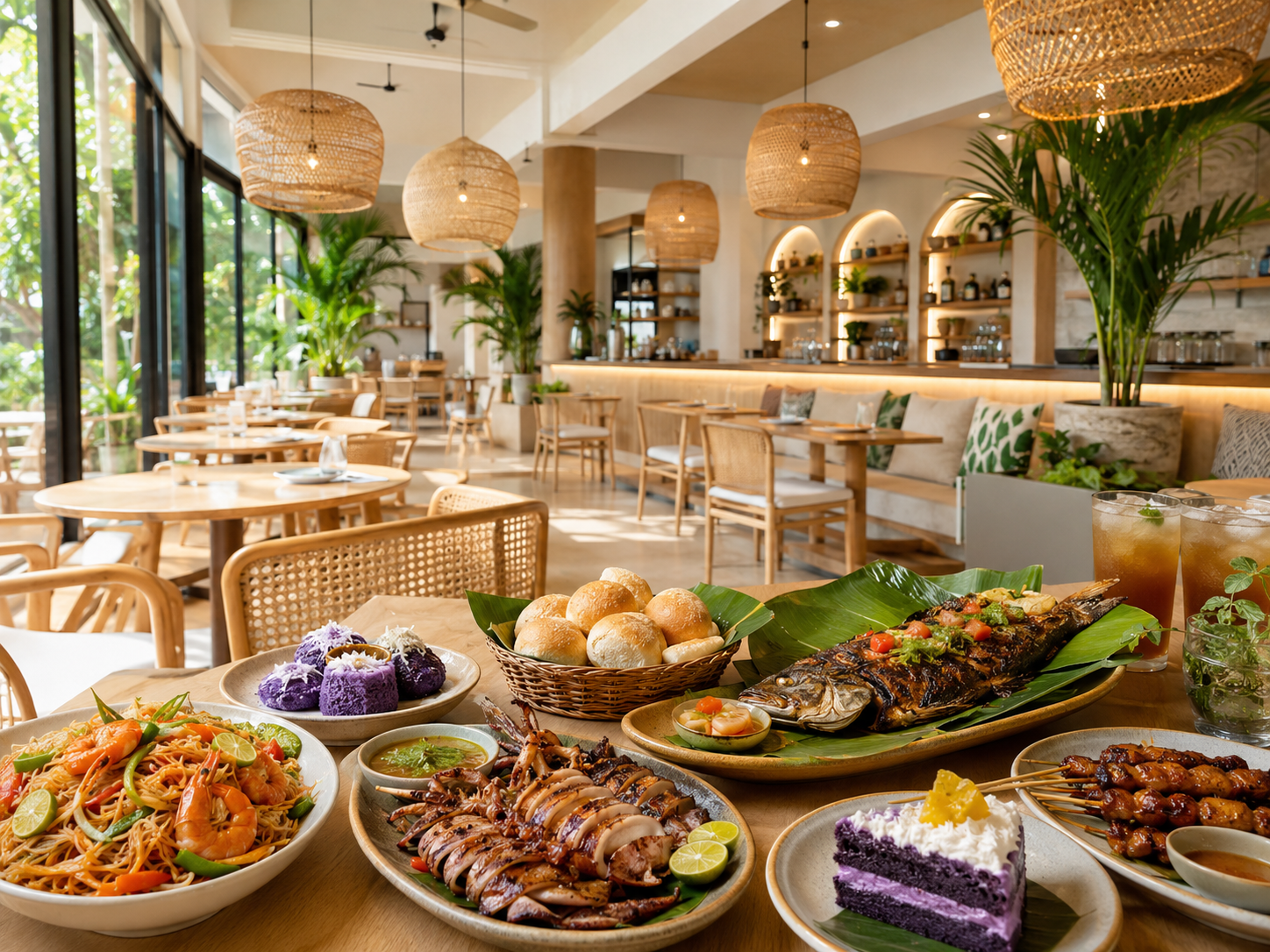
In Asiatown along Bellaire Boulevard, the Vietnamese population anchors one of the country’s largest concentrations of restaurants selling everything from banh mi to rice porridge served with offal. Japanese food — sushi, in particular — remains so popular that every month seems to bring news of a ritzy, $200-plus omakase spot opening. The chef behind a pocket-size Thai restaurant in the East End is currently a finalist for a prestigious James Beard Award.
Where do Filipino restaurants fit in?
While Filipino restaurants have long existed in Houston, including the beloved chain Jollibee, local chefs say their cuisine is ready — and perhaps long overdue — for a bigger platform in a city teeming with Asian food. They believe there’s room for more ambitious Filipino restaurants alongside independently owned ones, fast-casual concepts, food trucks and everything in between, including a spotlight for young chefs like Josh De Leon of the hit Underground Creamery.
For two days at the Post Market food hall in downtown, Soy Pinoy chef-partners Tom Cunanan and Paul Qui brought in one of the Philippines’ most-acclaimed chefs for a pop-up. JP Anglo, who is behind the restaurants Sarsa in Manila and Kooya Dubai, put together a menu with the Houston chefs that went beyond the typical recipes for adobo or lumpia. They cooked up Filipino dishes with a bit of Texas flair: crawfish rice noodles topped with chicharrones, kare kare tacos filled with oxtail, fried rice tossed with salted fish and chicken wings doused in burnt coconut, turmeric and lemongrass.
“We really think that Filipino food can flourish in Houston,” said Qui, who also runs the seafood-focused Golfstrommen, which sits atop the Chronicle’s Top 100 restaurants rankings. “There’s more room to push it forward.”
Want more Houston Chronicle?
Make us a Preferred Source on Google to see more of us when you search.
WHERE TO EAT IN HOUSTON: The Houston Chronicle’s Top 100 restaurants
Qui first brought on Cunanan as a consultant for Soy Pinoy’s opening. The James Beard Award-winning chef, who ran the popular Washington, D.C., restaurant Bad Saint before it closed during the pandemic, eventually became a partner and moved to Houston last year.
The menu at Soy Pinoy is less ambitious than the Filipino food Cunanan cooked up at Bad Saint, but he says the “soul cooking” focused on staples like adobo and pancit is a way to introduce more diners to his native cuisine.
“The learning curve is still there,” Cunanan said. “But as a chef — as a Filipino chef — my lifelong goal is to educate people about our food.”
If a wider Houstonian audience is not yet ready, there is a growing Filipino population here. Between 2015 and 2021, the Filipino population crept up 5 percent, from about 13,600 to 14,300, according to U.S. Census Bureau.
Houston’s large medical field, which includes many Filipino employees, is just one reason that sector of the Southeast Asian population continues to rise.
The ambitions of Qui and Cunanan, who hopes to open his own fine-dining restaurant in Houston, comes at a time when Filipino food has received more attention on a national level. Cookbooks, glossy magazine stories and high-profile restaurants have put more focus on the Philippines.
It’s also helped that ingredients such as ube and pandan, both of which have been hits on social media for their vibrant purple and green colors, respectively, have brought more attention to exploring Filipino food beyond a viral internet trend.
MORE FROM BAO ONG: Houston’s Street to Kitchen, Kemah’s Eculent partner on novel indigenous cooking restaurant
Native Houstonian Giovan Gabriel Tobias Cuchapin, the founder-owner of Be More Pacific in the Heights, has seen the rise of Filipino food in Houston.
When Cuchapin started a food truck in Austin, he stuck with sliders and tacos with some Filipino twists, like adobo tacos and rice or noodle bowls because he felt it was more approachable. He wasn’t as confident about using ingredients like shrimp paste or other dishes heavy on fish sauce.
“We had to reel in that first initial wave of customers,” Cuchapin said.
Cuchapin and other Filipino chefs say they also walk a fine line of whether to label their food authentic. The typical diner doesn’t always realize the great range of Filipino cuisine and its nuances, let alone each region and family’s slight variation on any given dish.
For Cuchapin, he’s embraced describing his menu as traditional. Both Qui and Cunanan look up to Be More Pacific’s push to make Filipino food more visible to their own community and a larger audience.
“It’s still in the beginning phases,” Cuchapin said. “We would love to get to the point where people are considering Filipino food all the time.”
