

Why Banana Leaves Are Part of the Filipino Dining Experience?

For many Filipinos, banana leaves are more than a beautiful way to serve food. They can bring back memories of home, family, school days, and meals prepared in simple but meaningful ways.
I know that feeling personally.
When I was in high school in the Philippines, I sometimes wrapped my lunch in banana leaves. Before using them, I would briefly pass the leaves over a wood fire. The heat softened them, made them sturdier and easier to fold around the food, and released a wonderful aroma.
By lunchtime, opening that banana-leaf-wrapped meal was part of the experience. The food smelled so good.
That memory came back to me when I saw the Bilao at Cafe Filipino Texas.
A Familiar Filipino Touch
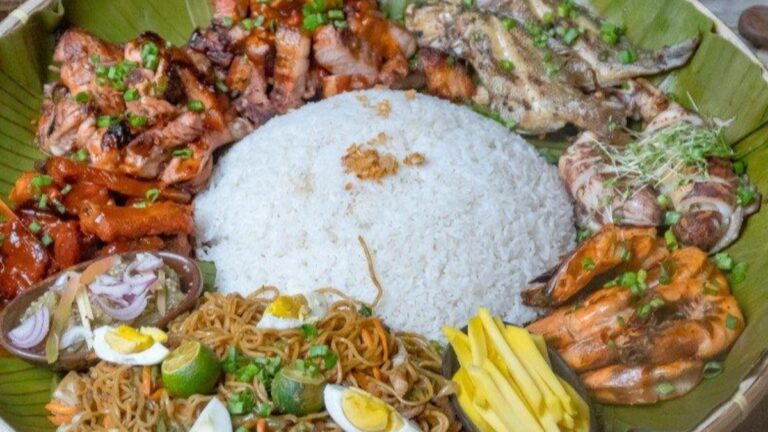
At Cafe Filipino Texas, the Bilao is served on a large round native Filipino tray lined with banana leaves. Rice is placed in the center, surrounded by fried shrimp, pork barbecue skewers, lumpia, crispy pata, pancit, and grilled seafood featuring a large fish or squid.
The green banana leaves create a beautiful natural presentation, but for people who grew up with them, they can mean something more.
They can feel familiar.
They can remind us of home.
More Than Decoration
Banana leaves have long been part of food traditions in the Philippines. They can be used for wrapping, cooking, serving, and presenting food.
For someone discovering Filipino cuisine for the first time, seeing a meal served on banana leaves may simply look beautiful and different.
For a Filipino far from home, that same sight may bring back a memory.
Maybe it is a family gathering.
A meal prepared by a parent or grandparent.
A celebration.
Or, in my case, a simple lunch carried to high school.
Food Has a Way of Bringing Memories Back
That is one of the beautiful things about food.
A smell, a flavor, or even a banana leaf beneath a meal can suddenly take you back to another time and place.
At Cafe Filipino Texas, the banana leaves beneath the Bilao are part of what makes the shared feast visually special. But they can also open the door to something deeper: a conversation about Filipino traditions and the memories people carry with them.
Sometimes culture is found in a recipe.
Sometimes it is found in a song.
And sometimes, it is found in something as simple as opening a lunch wrapped in a warm, fragrant banana leaf.